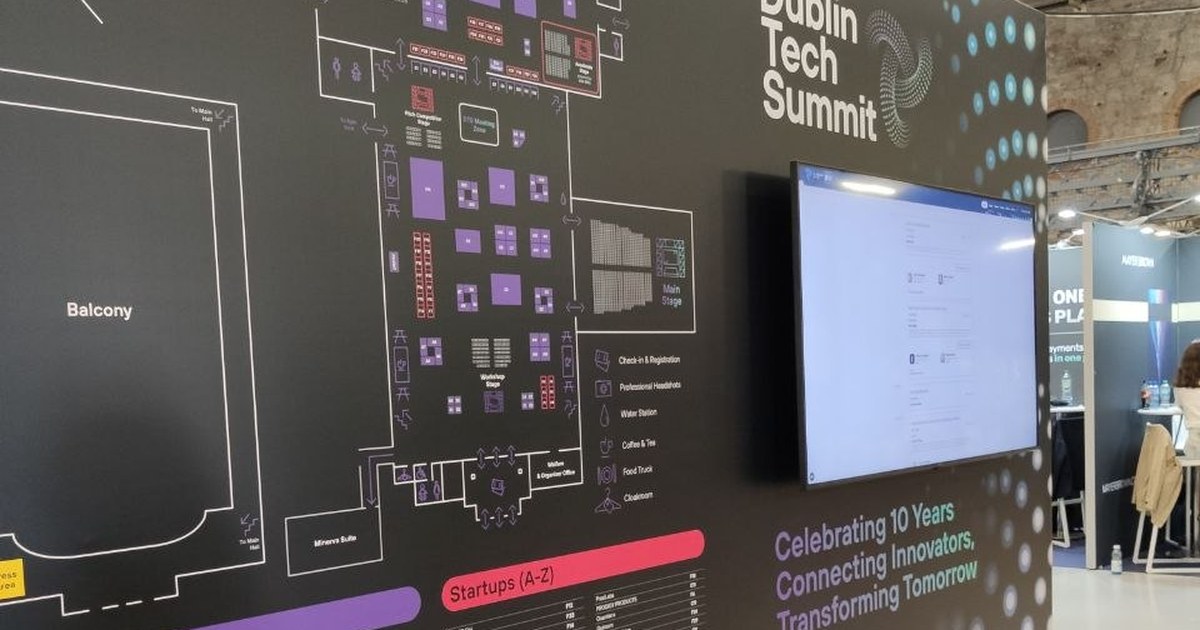
At Dublin Tech Summit, I kept coming back to one simple distinction from a panel on building and scaling companies:
You can feel like progress is happening without knowing whether progress is happening.
That is a dangerous place for a founder.
A week can be full of motion. Customer calls, product changes, investor conversations, dashboards, experiments, content, team updates, AI-generated drafts, new tasks on the board. From the outside, it can all look like work moving forward.
But motion is not the same as learning. And learning is not the same as a decision.
The part of the conversation that stayed with me was not a romantic startup story. It was more practical than that: a company needs enough structure to know what it is trying to learn, who owns the next move, and what would make the team change direction.
Not a 60-page business plan. Not theatre. Just enough operating clarity to stop confusing activity with progress.
A one-page plan is not bureaucracy
Founders can be allergic to planning language, usually for good reasons.
A lot of planning looks like performance. A strategy document gets written, polished, shared, and then ignored. The company still runs on urgency, personalities, and whatever problem was loudest that morning.
That is not the kind of plan I mean.
A useful plan is much smaller. One page can be enough if it answers the questions that make work real:
- what are we trying to prove;
- who is the customer we are learning from;
- what will we do next;
- who owns it;
- when will we look at the result;
- what would make us change our mind.
That kind of plan does not slow a startup down. It gives speed a direction.
Without it, the team can still move fast. The problem is that nobody can tell whether the speed is creating learning or just producing more things to manage.
Experiments need a scoreboard
I like experiments. Small pilots are usually better than vague innovation programmes. But an experiment without a scoreboard becomes a story the team tells itself afterwards.
If the result is good, it was a smart bet. If the result is weak, it was still useful learning. If nobody defined the expected signal, both interpretations can sound true.
That is why the metric matters before the experiment starts.
Not because metrics are perfect. They are not. A single metric can hide context, create weird incentives, or make a team optimize the wrong thing. But no metric is worse. No metric leaves the founder with mood, anecdotes, and the dangerous comfort of being busy.
One idea from the panel was especially sharp: if a metric is always green, take it off the dashboard.
I agree with that more than I probably would have a few years ago.
A useful dashboard should create some discomfort. It should show where the story is not matching reality. If every number confirms that things are fine, the dashboard may be decoration.
The test market has to match the customer
Another useful point from the session was about Ireland as a test market.
Ireland can be a good small market. It is close, networked, and practical for early conversations. But a small market is only a good test market if it contains the customer you actually need to learn from.
If your ideal customer profile is somewhere else, testing locally may teach you the wrong lesson.
This is easy to underestimate. Convenience can feel like strategy. A founder can get friendly meetings, supportive feedback, and early pilots in a market that was never going to become the real buyer. The learning feels cheaper, but it may be learning about the wrong environment.
For enterprise products, this matters a lot. Buying behaviour changes by market. Risk tolerance changes. Budget ownership changes. The way a customer evaluates a new tool in the US may be very different from how a smaller local team tests it in Ireland, Brazil, or anywhere else.
The question is not “where can we test?”
The question is: where do we need to learn?
The founder cannot outsource early market learning
This is where founder sales still matters.
Early sales is not only about closing revenue. It is how the founder learns the buyer’s language. What words they use. What they are afraid of. Which pain is urgent and which pain is only intellectually interesting. What has to be true before they trust the product.
That learning is hard to outsource too early.
A number two can help. A commercial hire can build process. Advisors can open doors. But if the company is still discovering the market, the founder needs to feel the objections directly.
I have seen this in product work and in content work too. When the person designing the system is too far from the real user, the work starts to optimize for internal logic. It becomes neat, but less true.
The same applies to AI workflows. If an agent is producing output for a process the founder does not understand, the automation may only make the misunderstanding faster.
Unit economics stop scale from becoming theatre
The most practical part of the panel was the reminder that founders need to understand the economics underneath the story.
Revenue going up is not automatically efficient scaling.
If sales grow by 10% and profit grows by 10%, maybe the company is just buying growth. The stronger signal is when the business gets more efficient as it grows. The team understands cost of sales, gross profit, overhead, net profit, cash conversion, payback periods, churn, retention, and how those numbers relate to each other.
You do not need to become an accountant to care about this.
But as a founder, you do need to understand the machine you are building. Especially when the outside story sounds good. A company can have momentum, press, pilots, and a convincing growth narrative while the underlying economics are still weak.
Metrics are not there to make the story prettier. They are there to make the story harder to fake.
AI makes motion cheaper
This is the part I keep connecting back to AI agents.
AI makes motion cheaper. It can generate drafts, code, summaries, tickets, images, research notes, and pull requests faster than a human team could do manually.
That is useful. It is also dangerous if the operating loop is weak.
More output does not automatically mean more progress. More generated content does not automatically mean better positioning. More code does not automatically mean a better product. More dashboards do not automatically mean better decisions.
The useful part is the contract around the output:
- what source of truth did the agent use;
- what task was approved;
- what changed in the repo;
- what checks passed;
- what privacy or quality review happened;
- where does a human make the decision;
- what metric will tell us whether this mattered.
For this site, I do not want an agent that just publishes because it can. I want a system that turns a selected idea into a draft PR, includes the source notes, prepares the visual assets, runs checks, and stops before the human decision.
The stop is not a weakness. It is part of the workflow.
Speed still matters
None of this is an argument for moving slowly.
Speed matters. Founders need momentum. Teams need short loops. Products need contact with the market before they become too polished to learn from.
But the loop has to produce something more than motion.
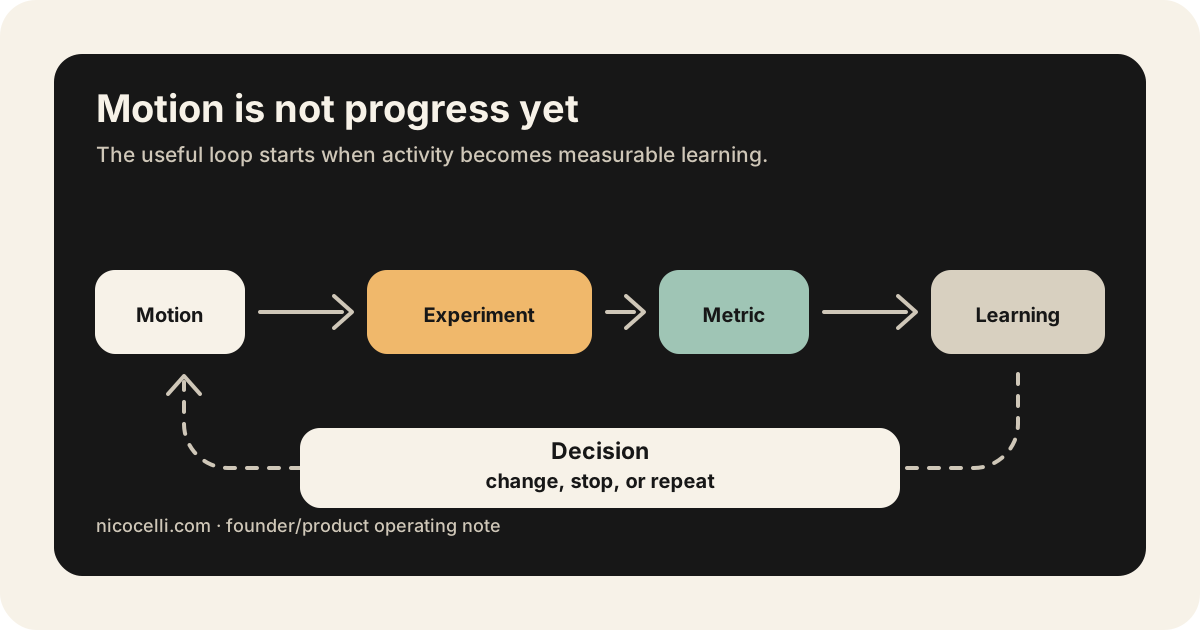
A good operating loop turns activity into evidence. Evidence into learning. Learning into a decision. And the decision into the next sharper move.
That is what I took from the panel.
And it applies to me too.
I am in Dublin not only as someone observing the tech ecosystem, but as a founder and builder validating Irish Talents with the market. The same questions are on my own table: what are we trying to prove, who are we learning from, which signals matter, and what decision the next loop should produce?
Writing about this publicly is also part of the work. It creates visibility for the project, but more importantly it forces the thinking to become clearer. If Irish Talents is going to help people and companies navigate an important, high-friction problem, I need to keep measuring whether the work is producing real learning, not just more activity.
Move fast, yes. But know what you are measuring. Otherwise the company may only be getting better at looking busy.