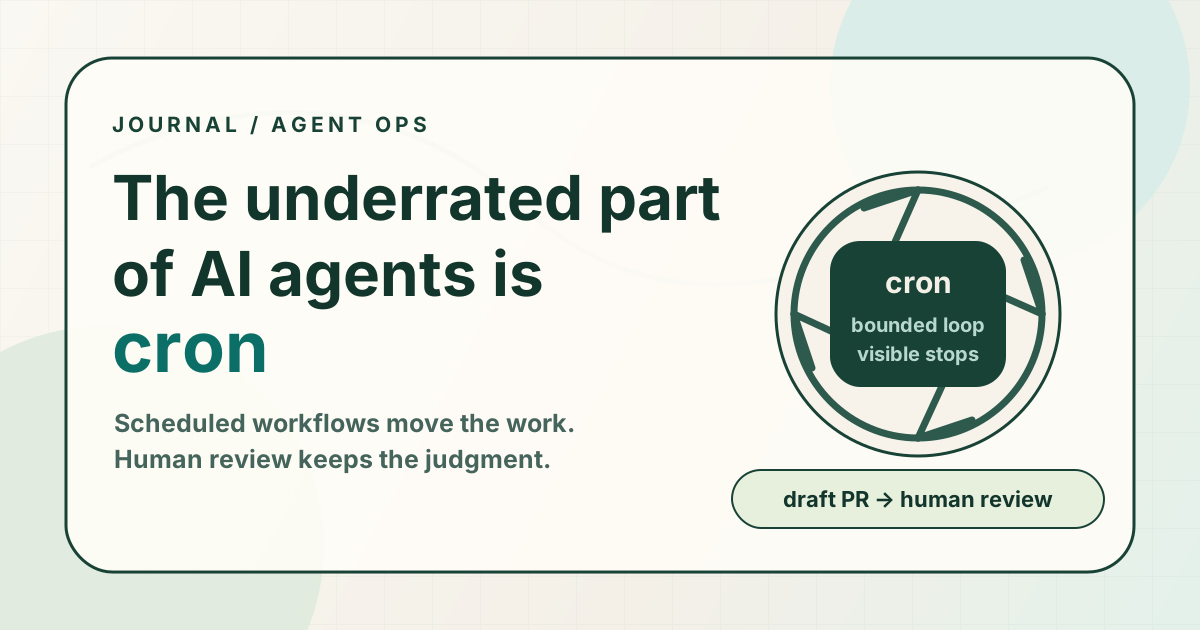
The AI agent workflows that have started to matter most to me do not begin with a better prompt.
They begin with a schedule.
That sounds boring because it is boring. But boring is exactly why it works. A scheduled worker can wake up, check the right source of truth, pick one approved task, make a bounded change, run the checks, and leave me with something I can review.
Not a finished decision. Not a published article. Not a surprise merge at 3am.
A pull request.
That distinction matters. I do not want agents randomly deciding what my business, site, or writing should do next. I want them to move known work to the point where human judgment becomes easier to apply.
A chat is useful when I am exploring. A schedule is useful when the same kind of work should happen again.
Cron changes the shape of the work
A one-off prompt depends on me remembering that something should be done.
That is fine for a quick question. It breaks down for work with a natural rhythm: reviewing a content backlog, summarizing analytics, checking stale metadata, preparing a social draft, triaging an Obsidian inbox, or noticing that an issue has been waiting for review too long.
When those tasks live only in my head, they compete with everything else. When they live in scheduled workflows, the question changes.
It stops being: will I remember this?
It becomes: what rules make this safe to run when I am not watching?
That is the interesting design problem.
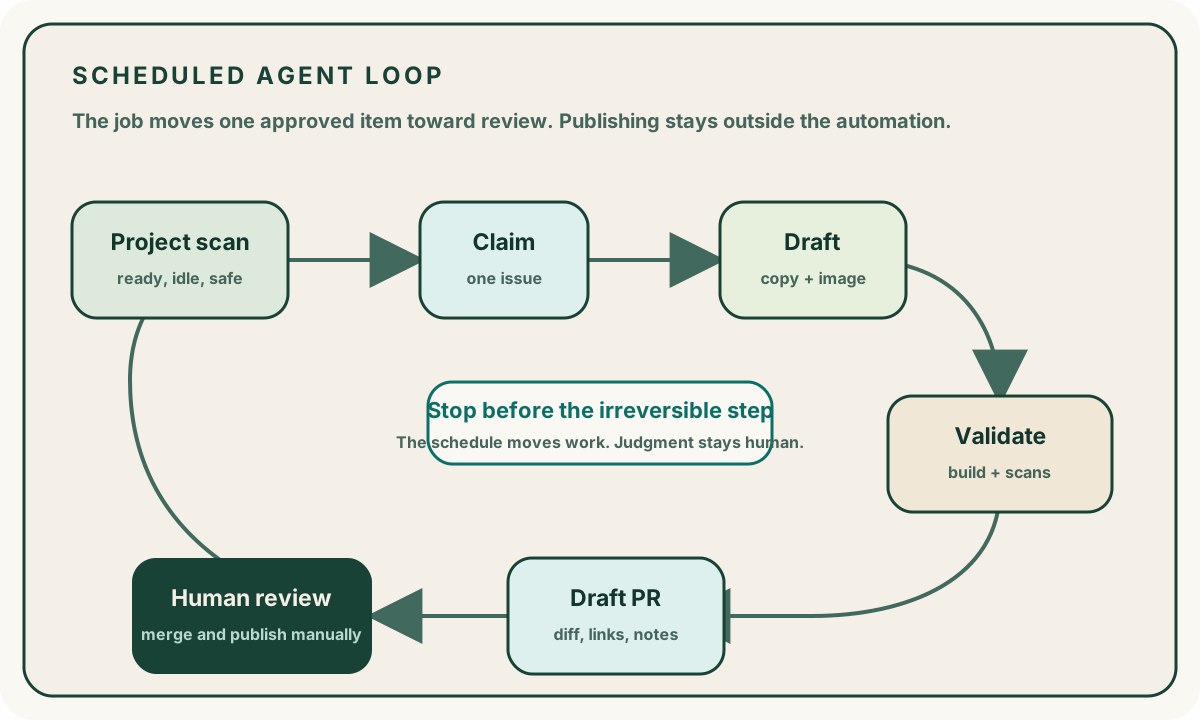
For this site, the journal worker does not go looking for inspiration. It reads a GitHub Project. It checks explicit fields: content status, automation status, target repo, risk tier, priority, and issue structure. If a post is marked ready, it can claim one issue, draft the article, create the visual package, prepare LinkedIn copy, run validation, and open a draft PR.
The important word is still draft.
The schedule moves the work forward. It does not publish it.
The schedule is not the strategy
Cron does not decide what matters. It does not know whether a personal note is worth publishing. It does not understand taste. It cannot tell me if a piece feels too generic, too corporate, or simply not mine.
That part stays human.
The scheduled worker should operate inside a contract. Mine is simple enough:
- process one issue per run;
- only work on items marked ready;
- respect risk tiers;
- never auto-merge;
- never auto-publish;
- keep private notes, tokens, client details, and unsupported claims out of public copy;
- turn the result into a branch, diff, build result, PR, and issue comment.
This can look heavy for a blog post. I do not see it that way. It is what separates an operating loop from a content slot machine.
A recurring agent needs stricter boundaries than a manual prompt because it can act while I am away. The safest version is not the agent with the most autonomy. It is the one with the clearest next step, the strongest evidence, and the easiest review path.
What I would actually schedule
This pattern is bigger than writing.
Some jobs are obvious candidates for me:
- check the personal-site backlog and draft one approved journal issue;
- summarize the last week of PostHog and Search Console signals;
- scan the site for dead links or stale metadata;
- prepare LinkedIn copy from a merged article without posting it;
- triage the Obsidian inbox and suggest where notes belong;
- flag GitHub issues that look blocked, duplicated, or stale;
- run a light privacy or hype-language scan on public drafts;
- prepare a weekly list of decisions I need to make.
None of this requires the agent to pretend it owns the business. It requires the agent to check sources, follow rules, edit files, run tools, and hand back artifacts.
That is where agents become practical for me.
The value is not that they replace my attention. They reduce the amount of attention I spend reloading context and repeating setup steps.
Reviewable output beats invisible automation
A scheduled workflow becomes dangerous when it optimizes for completion instead of review.
That is why I like pull requests as the output. A PR gives me a diff, a branch, validation notes, linked issues, assets, and a place to comment. It also gives me a clean moment to say no.
For content, that matters as much as it does for code. A build can pass while the article still feels wrong. The social image can look polished while the message is too generic. The LinkedIn copy can be safe and still sound like something I would never post.
So the loop should stop before the irreversible part.
Draft the article. Create the asset. Run the checks. Open the PR. Comment on the issue. Then wait.
That pause is not a flaw. It is the control point.
Operational memory is the leverage
Cron works with agents only if the workflow has memory.
The worker needs to know where the repo is, what the content schema expects, how the brand should sound, which phrases to avoid, which project fields define eligibility, what visual assets should look like, and where to report the result.
If I had to paste all of that every time, the whole thing would collapse back into manual prompting.
Instead, the context lives in notes, issues, repo conventions, project fields, and previous PRs. The agent can inspect those pieces when the scheduled job runs. The workflow depends less on a perfect prompt and more on a maintained operating layer.
That is also why I do not want cron agents running without evidence. If they cannot verify the repo, project, issue, or build, they should stop.
A silent failure is bad. A confident unverified change is worse.
The boring part is the useful part
A lot of agent demos still focus on the impressive moment: the agent wrote the code, drafted the strategy, designed the page, summarized the market.
I care more about the quieter version.
The agent checks the board on Tuesday morning. It sees one item that is safe to process. It updates the status. It reads the brief. It drafts the work. It creates the image. It runs the build. It opens the PR. It tells me what changed and what still needs review.
That is not magic. It is operations.
And that is why I keep coming back to cron.
The future I care about is not an agent that wakes up and invents its own mission. It is a set of scheduled, bounded workflows that keep moving the right work toward human judgment.
Cron is not the glamorous part of AI agents.
It may be one of the parts that actually matters.